OKRs That Stick: How to Set Goals People Actually Follow Through On
Move beyond OKR theater with a practical system for writing measurable objectives, running check-ins managers will attend, and linking goals to the work your company already tracks.
 Warka TeamPeople operations9 min read
 Performance
Objectives and key results (OKRs) promised alignment. Instead, many organizations got quarterly documents that nobody opened after the kickoff meeting. Teams copy objectives from last year, inflate key results to look ambitious, and treat check-ins as optional calendar noise.
OKRs can stick—but only when they connect to how work actually happens: visible progress, manager attention, and honest conversation when a goal is at risk. This article covers how to write OKRs that survive contact with reality, cadences that fit busy teams, and tooling choices that keep goals adjacent to people data—not buried in a slide deck.
For teams ready to operationalize the cycle, Warka OKRs ties objectives to org structure, check-in reminders, and at-risk signals so leaders see drift before the quarter ends.
Why most OKR programs fail
Understanding failure modes helps you design around them.
OKRs as performance review substitutes
When OKRs determine compensation directly, employees sandbag targets or hide risk until it is too late. OKRs work best as alignment and learning tools—informing reviews but not replacing nuanced manager judgment.
Too many objectives
Companies that assign five objectives with four key results each create twenty measurable commitments per person per quarter. Nobody tracks twenty things well. Two to three objectives per level, each with two to four key results, is the practical ceiling for knowledge workers.
Key results that are tasks, not outcomes
"Launch new pricing page" is a task. "Increase trial-to-paid conversion from 8% to 12%" is a key result. Tasks belong in project tools; key results describe measurable change in the world.
Check-ins without consequences
If managers skip check-ins and leadership never asks about OKR status in operating reviews, the system dies quietly. Cadence must be lightweight but non-optional—shorter meetings, clearer agendas, visible dashboards.
Disconnected from org reality
Objectives assigned to people who changed teams mid-quarter, or tied to outdated headcount, lose credibility. OKRs must sit on the same org chart and employee records managers trust—exactly what a unified People directory and OKR module share.
Writing objectives people remember
An objective answers: What meaningful change do we want? It should be qualitative, inspirational, and bounded by time—usually one quarter, sometimes annual for company-level themes.
The objective formula
Strong objectives follow a simple pattern:
- Direction: growth, quality, efficiency, customer trust, team capability
- Scope: which product, market, or function
- Time: implicit in quarterly cadence
Examples:
- "Become the most trusted payroll platform for mid-market HR teams."
- "Reduce time-to-hire without sacrificing quality of hire."
- "Build a manager bench that runs effective weekly people reviews."
Avoid jargon stacks and composite objectives ("Grow revenue and improve NPS and launch three features"). Split them.
Company, team, and personal alignment
OKRs cascade intent, not math. Company key results do not need to sum into team key results like a spreadsheet. Instead:
- Leadership sets 3–5 company objectives for the quarter.
- Teams draft objectives that clearly support one or more company goals.
- Individuals own key results that they can influence—often shared with teammates.
When a team objective cannot trace to a company objective, either the company list is incomplete or the team is doing work leadership does not prioritize. That conversation is valuable.
Writing key results you can score
Key results must be measurable, time-bound, and ** verifiable** without debate at quarter end.
Quantitative key results
Prefer metrics you already track: revenue, churn, activation rate, support ticket volume, payroll exceptions per cycle, time-to-fill for roles. If you cannot measure it today, the first key result may be "Instrument X so we can measure baseline by week four."
Qualitative key results with clear rubrics
Some outcomes resist pure numbers—culture, documentation quality, compliance readiness. Define a rubric:
- KR: "Complete SOC 2 Type II readiness with zero critical gaps in HR access controls."
- Score 0.0: audit not started
- Score 0.5: gaps identified with remediation plan
- Score 1.0: audit passed
Rubrics prevent arguments over "did we achieve it?"
Balancing leading and lagging indicators
Lagging indicators (revenue, retention) prove outcomes. Leading indicators (weekly active managers, check-in completion rate, pipeline coverage) predict them. Mix both so teams see early warning.
The stretch target convention
Many organizations score key results on a 0.0–1.0 scale where 0.7 is "good" and 1.0 is exceptional. Communicate this explicitly so "missing" a stretch target is not treated as failure if meaningful progress occurred.
Cadence: the rhythm that makes OKRs operational
OKRs die in the gaps between kickoff and retrospective. Install a rhythm:
Week 0: Planning (last week of prior quarter)
- Leadership publishes draft company OKRs.
- Teams hold 90-minute planning sessions: draft objectives, negotiate dependencies, assign owners.
- Finalize by day five of the new quarter.
Weekly: Check-ins (15 minutes per team)
Each key result owner shares:
- Current score or confidence (green / yellow / red)
- What changed since last week
- What they need from another team or manager
Managers log updates in OKR software—not slide decks—so status is searchable and reminders fire automatically.
Monthly: Leadership review (60 minutes)
Review company-level key results. Surface at-risk items. Reallocate resources or narrow scope—changing OKRs mid-quarter is allowed when assumptions break; pretending nothing changed is not.
End of quarter: Retrospective and scoring
Score key results honestly. Ask:
- Did these OKRs drive the right work?
- Were key results measurable enough?
- Did check-ins happen?
Feed lessons into next quarter's planning—not into blame.
Manager behaviors that separate OKR theater from OKR culture
Tools enable behavior; managers enforce it.
Model public OKRs
When executives share their objectives and weekly confidence updates, ICs believe the system applies to everyone—not just individual contributors.
Protect check-in time
Cancel check-ins only for genuine crises—not for routine overload. If check-ins always lose, OKRs are not a priority; say so explicitly.
Reward surfacing risk early
Celebrate the team that flagged a yellow status in week three and replanned—more than the team that hid problems until week twelve.
Connect OKRs to weekly people reviews
Managers already scanning team health weekly can add one OKR prompt per direct report: "What is at risk this week?" Pairing OKR check-ins with people review rituals reduces calendar sprawl.
Tooling: what your OKR system must do
Spreadsheets work for fifteen people. They collapse at fifty—version conflicts, no reminders, no link to org changes.
Minimum requirements:
- Org-aware ownership: objectives attach to teams and people; reorgs update assignments
- Check-in history: timestamped confidence and notes, not just current state
- At-risk visibility: dashboards for managers and HRBPs when scores stall
- Permissions: employees see relevant company and team OKRs; sensitive goals stay restricted
- Integration with tasks (optional): link key results to execution work without confusing tasks for outcomes
Warka OKRs provides check-in workflows, objective assignment notifications, and at-risk highlighting alongside the same employee and team records used for attendance, leave, and payroll—so goal ownership never drifts from reality.
OKRs versus KPIs: use both deliberately
OKRs describe change this quarter. KPIs monitor ongoing health. Confusing them creates either static "objectives" that never expire or quarterly chaos for metrics that should be steady.
| OKRs | KPIs | |
|---|---|---|
| Purpose | Drive prioritized change | Monitor baseline performance |
| Horizon | Quarterly (mostly) | Continuous |
| Target | Ambitious stretch | Threshold or steady improvement |
| Example | "Reduce payroll exceptions 40% this quarter" | "Payroll accuracy rate ≥ 99.5%" |
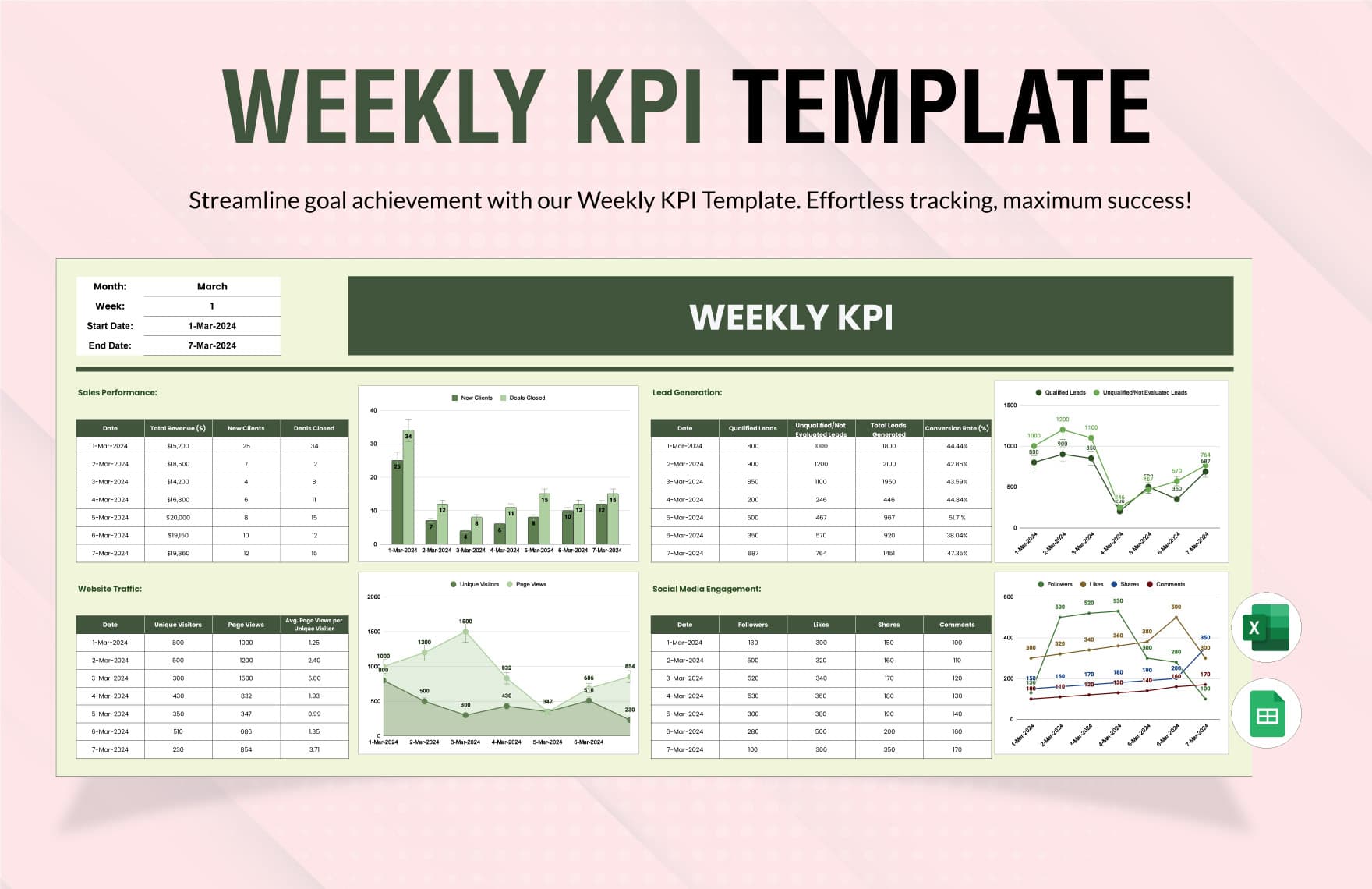
Run KPI dashboards weekly; run OKR check-ins weekly too—but do not duplicate the same metric in both systems without clarity on which drives decisions.
Scaling OKRs across regions and functions
Global companies face extra friction: time zones, language, and local operating constraints.
Localize examples, not structure
Keep the same OKR cadence everywhere. Translate objective wording for local teams but preserve company key results in a single scoring model for leadership reviews.
Respect statutory and operational calendars
A payroll OKR tied to "close by day three" may be unrealistic where local law mandates different timelines. Teams should adapt key results while aligning to the company objective ("faster, accurate pay close").
Async check-ins with written updates
Distributed teams should default to written check-ins in the OKR tool, with live discussion reserved for yellow and red items. This respects focus time and creates an audit trail.
FAQ
How many OKRs should each employee have?
Aim for two to three objectives per person per quarter, with two to four key results each. Individual contributors often share team key results rather than owning unique objectives for everything. Less is more—if everything is an OKR, nothing is.
Should OKRs be tied to compensation?
Most practitioners recommend separating OKRs from bonus formulas to encourage ambition and honest risk reporting. OKRs can inform performance conversations without being the sole numeric input to pay. If you must link them, use qualitative judgment on effort and learning—not strict binary payout per key result.
Can we change OKRs mid-quarter?
Yes, when assumptions materially change—lost customer, reorg, regulatory shift. Document the change, adjust scores baselines if needed, and communicate why. Mid-quarter edits should be exceptional, not weekly scope creep.
What is a good check-in completion rate to target?
Healthy programs exceed 85% weekly check-in completion for teams with OKRs assigned. Below 70%, investigate whether cadence is too heavy, tooling is friction-heavy, or managers lack sponsorship from leadership.
How do OKRs fit with agile sprints?
Sprints deliver tasks; OKRs measure outcomes. Map sprint goals to key results without duplicating every story as a KR. Review sprint retros against OKR confidence monthly to ensure delivery work still serves quarterly priorities.
OKRs stick when they are few, measurable, checked weekly, and owned by managers who treat goal updates as seriously as staffing decisions. Write better key results, run a disciplined cadence, and put objectives where org data already lives. Explore OKR software in Warka to run check-ins, at-risk alerts, and team alignment on the same platform as your people operations.