Interview Scorecards: Fair Hiring Without Bias
How structured interview scorecards reduce bias, improve hiring decisions, and keep recruitment pipelines comparable across candidates and interviewers.
 Warka TeamPeople operations5 min read
 Guides
Unstructured interviews feel “human.” They also amplify bias: likability, shared schools, and confidence theater crowd out job-relevant evidence. Scorecards—structured criteria with ratings and notes—make hiring fairer and more repeatable.
This guide covers how to design scorecards, train interviewers, and use them in a pipeline without turning interviews into robots.
What a scorecard is
A scorecard lists competencies or skills tied to the role, each with:
- A definition of what “good” looks like
- A rating scale (e.g., 1–4)
- Space for evidence notes
- A clear owner (which interviewer assesses which competency)
Every candidate for the same role should be evaluated on the same card.
Why scorecards reduce bias
- Force criteria before meeting the person
- Make “culture fit” specific (collaboration, ownership) instead of vague vibes
- Create comparable records for debriefs
- Surface when one interviewer is consistently harsher
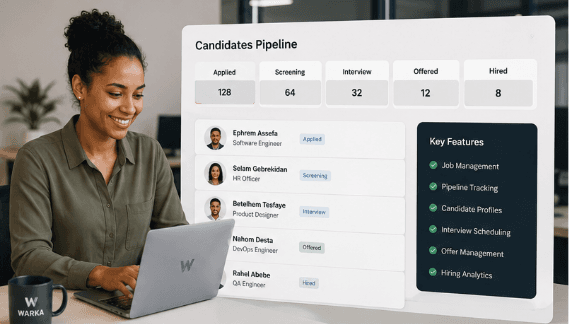
They do not eliminate bias—but they make bias harder to hide. Pair with a clear recruitment pipeline.
Design principles
Derive criteria from the job, not the resume
Ask: What must someone do in the first 90 days? Turn answers into 4–6 competencies max. More than that and interviewers rush.
Separate must-haves from nice-to-haves
Must-haves gate advancement. Nice-to-haves inform ranking among qualified candidates—not excuses to reject non-traditional backgrounds.
Define the scale in writing
Example 1–4 scale:
- Clear gap for this role
- Developing; needs support
- Solid for the level
- Strength that raises the team bar
Without definitions, “3” means everything.
Assign competencies to rounds
| Round | Focus |
|---|---|
| Screen | Motivation, basics, logistics |
| Hiring manager | Core craft + ownership |
| Peer | Collaboration, communication |
| Leadership (if needed) | Scope, judgment |
Avoid every interviewer rating everything—that creates noise.
Running the interview
- Share the scorecard with interviewers before the day
- Use the same core questions for each competency
- Take evidence notes during the interview
- Submit scores before group debrief (prevents anchoring)
- Debrief: discuss outliers with evidence, not personality labels
Debrief rules that protect fairness
- Start with score distribution, then stories
- Ban “I just wouldn’t grab coffee with them” without a mapped competency
- Document the decision and dissent
- Keep rejected candidates’ cards for process audits
Common mistakes
- Scorecard created after the first three interviews
- 12 competencies on one form
- Ratings without notes
- Hiring manager overrides without recording why
- Different cards per interviewer for the same role
FAQ
Do scorecards slow hiring?
They add minutes of structure and save hours of bad-hire cleanup. Pipelines usually move faster because debriefs stop circling.
Can we still have conversational interviews?
Yes. Structure the criteria and sample questions—not a rigid script that kills rapport.
Should candidates see the scorecard?
Sharing competency themes is fine; sharing internal ratings is usually not. Transparency about process builds trust without leaking calibration.