Ethiopian Leave Entitlements: Annual, Sick, and Maternity Leave Under Labour Law
What Ethiopian employers must provide for annual, sick, and maternity leave — accrual rules, pay obligations, documentation, and how to manage leave without payroll surprises.
 Warka TeamPeople operations11 min read
 Leave
LeaveLeave is one of the most visible HR policies an employee ever touches — and one of the easiest areas to get wrong. Under Ethiopia's Labour Proclamation No. 1156/2019, employers must grant specific leave types with defined pay treatment. Misapply the rules and you face not only employee disputes but potential scrutiny from the Ministry of Labour and Social Affairs (MoLSA) during inspections.
This article explains the main statutory leave entitlements Ethiopian employers must honour: annual leave, sick leave, and maternity leave. It also covers how to operationalize those rights — accrual, approval, documentation, and the payroll connection — so leave works for people and for compliance.
Leave as a Legal Obligation, Not a Perk
In many companies, leave is treated as an informal favour — "ask your manager and see." Ethiopian law treats leave differently. Statutory entitlements are rights, not discretionary benefits. An employer cannot contract out of minimum standards, and policies that fall below the proclamation are void to that extent.
That means your leave policy must start from what the law requires and then add any company enhancements (extra annual days, extended maternity support, paid compassionate leave beyond the minimum). HR's job is to make the legal floor visible to managers and employees alike.
When leave balances are wrong, payroll is wrong. Paid leave keeps full salary flowing; unpaid leave reduces gross pay. Sick leave beyond paid limits may shift to unpaid. Maternity leave has its own pay rules. A system like Leave in Warka that connects approvals to balances and Payroll in Warka prevents paying a full month when someone was on unpaid absence.
Annual Leave: Entitlement, Accrual, and Scheduling
Annual leave is paid time off for rest and recreation. It is the leave type employees use most — and the one most often miscalculated when tenure changes or year-end balances carry over.
Minimum Entitlement by Length of Service
Under the Labour Proclamation, annual leave entitlement increases with continuous service. The standard framework is:
- First year of service: 16 working days of paid annual leave
- After one year of service: entitlement increases progressively with tenure, reaching longer periods for employees with many years of service (the proclamation sets stepped increases at defined service milestones)
Employers sometimes confuse "first year" with "calendar year." Entitlement is tied to the employee's length of service with the employer, not to the January–December calendar. A hire who starts in September earns their first-year entitlement on that timeline, not on 1 January.
When Annual Leave Is Earned
Annual leave is earned over the period of service. Many companies accrue leave monthly (e.g., 1.33 days per month for a 16-day entitlement) so balances reflect partial years fairly. Others grant the full entitlement at the start of the leave year. Either approach is acceptable if it is documented, applied consistently, and never falls below the legal minimum.
Accrual policies must also address:
- New hires mid-period: pro-rate or front-load per policy, without dropping below statutory rights once earned
- Departing employees: pay in lieu of unused statutory leave where required on termination
- Maximum carry-over: the proclamation limits how much unused leave can be carried forward; excess may need to be taken or paid out
Scheduling and Employer Approval
Employees have the right to annual leave, but the employer may schedule it considering operational needs — provided the scheduling does not effectively deny leave. Best practice is a request-and-approval workflow with reasonable notice (often two weeks for planned leave).
Managers should not pressure employees to skip leave indefinitely. Accumulated leave liabilities grow on your balance sheet and create burnout risk on the production line or in the office.
Public Holidays and Annual Leave
Public holidays that fall during annual leave are typically not counted as annual leave days — the employee does not "spend" their entitlement on a public holiday. Maintain a public holiday calendar in your HR system so leave calculations exclude those dates automatically.
Sick Leave: Medical Absence and Pay Progression
Sick leave covers absence due to illness or injury not caused by the employer's fault. It is not unlimited paid time off — the law sets a paid portion and conditions for the remainder.
Paid Sick Leave Duration
An employee who completes their probation period is entitled to sick leave with pay for a prescribed period when illness is certified by a medical professional. Under the proclamation:
- Paid sick leave: up to six months in aggregate, with pay at decreasing rates over successive periods (full pay for an initial block, then reduced percentages for subsequent blocks within the six-month window — as specified in the proclamation's schedule)
The exact pay percentages step down over time. HR must track not only days taken but which band an employee is in — paying full salary for someone already in the reduced-pay portion of sick leave is a costly error.
Medical Certification
Employers may require medical proof for sick absence, especially beyond one or two days. The request must be reasonable and applied consistently — not only for employees managers suspect of malingering.
Store certificates securely. They contain health information and should be accessible only to HR, not line managers, unless the employee consents.
Relationship to Annual Leave
Sick leave and annual leave are separate entitlements. An employee cannot be forced to use annual leave when they are genuinely ill and have sick leave available. Conversely, using sick leave for unauthorized absence when fit to work is misconduct, handled through discipline — not by rewriting leave balances retroactively.
Long-Term Illness and Return to Work
When sick leave exhausts paid entitlement, further absence may be unpaid or lead to termination on grounds of health incapacity, following legal procedure. Before reaching that point, consider reasonable accommodation, lighter duties, or phased return — particularly for valued long-tenure employees.
Document every conversation. MoLSA expects employers to show they followed process, not personality.
Maternity Leave: Protection for Working Mothers
Maternity leave is among the most strictly protected entitlements. Errors here draw disproportionate legal and reputational risk.
Duration of Maternity Leave
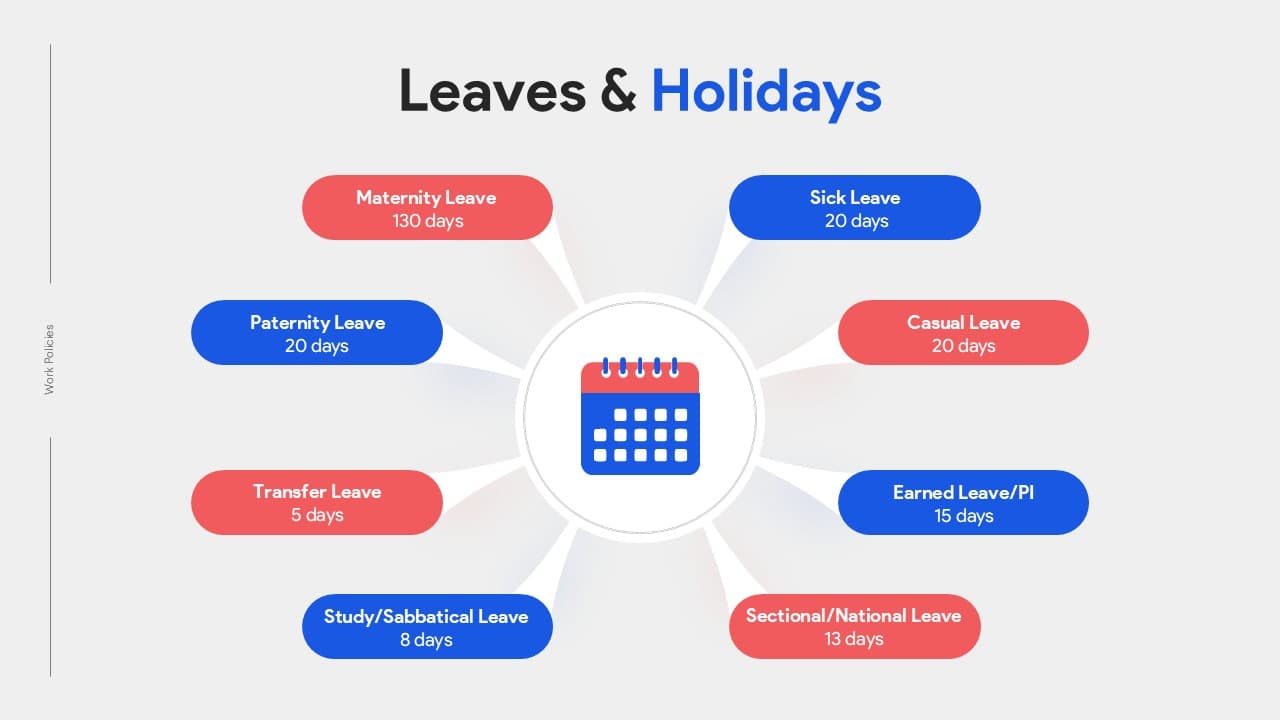
A female employee is entitled to fully paid maternity leave of 90 consecutive days — commonly structured as 30 days before the expected date of delivery and 60 days after childbirth, with flexibility where medical advice supports different timing.
The leave is paid at the employee's normal wage rate. Deductions such as pension and PAYE still apply unless specific exemptions exist — payroll must process maternity pay like regular salary, not as a separate undocumented top-up.
Job Protection
An employee on maternity leave cannot be dismissed for reasons related to pregnancy or childbirth. Her position, or an equivalent one, must be available on return. Any restructuring that affects her role during leave requires careful legal review.
Managers sometimes treat maternity leave as a convenient time to eliminate a headcount. That is unlawful and exposes the company to reinstatement orders and compensation.
Nursing Breaks
After returning from maternity leave, a nursing mother is entitled to paid nursing breaks during working hours for up to one hour per day until the child is six months old. Factory and shift employers must plan coverage for these breaks without penalizing the employee.
Paternity and Parental Leave
Ethiopian law has expanded family-related leave over recent proclamations. Employers should verify current provisions for paternity or shared parental leave in their sector and collective agreements. Even where not statutory, competitive employers offer short paid paternity leave — document it clearly so payroll treats it as paid time, not absence.
Other Statutory Leave Types Employers Should Know
Beyond the "big three," the proclamation provides additional leave categories that HR teams often overlook until an employee requests them.
Leave for Family Events
Employees are entitled to short paid leave for specific events such as marriage and death of close relatives, within the limits defined by law. Track these as separate leave types so they do not consume annual leave incorrectly.
Leave for Public Duties
Absence to perform civic duties (e.g., certain court appearances or public obligations defined by law) may require paid leave. Rare in daily operations but important when it arises.
Special Leave for Trade Union Activities
Union officials may have rights to leave for union business. If your workforce is organized, align with collective agreement terms that may exceed statutory minimums.
Building a Leave Policy That Works in Practice
Statutory knowledge is the foundation. Operational clarity is what prevents disputes.
Write the Policy in Plain Language
Avoid copying legal articles verbatim. Translate entitlements into tables:
| Leave type | Entitlement | Paid? | Documentation |
|---|---|---|---|
| Annual | 16+ days by tenure | Yes | Manager approval |
| Sick | Up to 6 months (tiered pay) | Partial | Medical certificate |
| Maternity | 90 days | Yes | Medical / birth confirmation |
Publish the policy in Amharic and English if your workforce is bilingual. What employees understand, they use correctly.
Define the Leave Year
Choose whether your leave year is calendar, fiscal, or rolling from hire date. Rolling hire-date years are fairest for accrual but harder to administer without software. Calendar years are simpler but require pro-rating for new hires.
Approval Workflow
Every leave request should capture: type, dates, approver, and status. Denied requests need a reason. Approved requests should lock those dates on the attendance calendar so payroll does not mark the days as unauthorized absence.
Connecting Leave in Warka with Attendance in Warka means approved leave automatically explains gaps on the time sheet.
Balance Visibility
Employees should see current balances without emailing HR. Transparency reduces "I thought I had five days" arguments on the last day of the month.
Manager Training
Managers are the front line. Train them on:
- Minimum entitlements they cannot refuse
- Difference between sick and annual leave
- Maternity protection rules
- How unpaid leave affects team capacity and payroll
A one-hour briefing during onboarding for new managers pays for itself the first time someone avoids an illegal denial of maternity leave.
Leave and Payroll: Getting the Connection Right
Payroll errors from leave usually fall into three buckets:
- Paid leave processed as absence — employee is underpaid
- Unpaid leave processed as paid — employee is overpaid and the company may not recover easily
- Sick leave pay bands misapplied — wrong percentage of salary paid
Fix these by running a pre-payroll leave report: list every employee with leave in the period, the type, and the pay treatment. HR signs off; payroll imports or verifies against the same data.
For partial-month unpaid leave, agree on the daily rate divisor (working days vs. calendar days) and document it in the policy. Inconsistency across departments is a common source of equal-treatment complaints.
Compliance Inspections and Documentation
MoLSA inspectors may ask to see leave records during workplace visits. Maintain:
- Written leave policy distributed to employees
- Individual leave balances and history
- Approved requests with dates and approver
- Medical certificates for sick leave (secure storage)
- Maternity leave records and return-to-work dates
Digital systems with audit logs demonstrate control far more convincingly than a folder of signed paper forms that nobody can find.
FAQ
Can an employee carry forward unused annual leave indefinitely?
No. The Labour Proclamation limits carry-forward of unused annual leave. Entitlement beyond the permitted carry period should be taken or handled according to legal requirements — often including payment in lieu on termination for accrued but unused statutory leave.
Is annual leave paid at basic salary only or gross including allowances?
Paid annual leave is generally paid at the employee's normal wage for the equivalent period — typically including components that form part of regular remuneration. Confirm against your employment contracts and whether specific allowances are excluded during leave.
Can we require a doctor's note for a single sick day?
Policies requiring medical certification from the first day are often unreasonable and may not be enforceable. Many employers require certification after two or three consecutive sick days. Apply the rule consistently for all employees in the same category.
What if an employee does not return after maternity leave?
Follow termination procedures for unauthorized absence only after confirming communication and allowing reasonable time. Do not assume abandonment without documented outreach. Maternity-related absences receive heightened legal protection — seek legal advice before any dismissal action.
Do probationary employees get annual leave?
Entitlement accrues with service. Probationary employees may have restricted use of leave until confirmation, but statutory rights accrue during probation unless the law specifically defers them. Do not deny earned leave solely because someone is on probation without checking current legal text and contract terms.
Related product
Leave
Policies, balances, and approvals that flow into payroll before every run.
View Leave