How Attendance and Leave Should Sync Before Payroll
Why payroll errors start upstream—and how to design attendance, leave, and pay so approved time off and hours flow into the pay run without spreadsheet reconciliation.
 Warka TeamPeople operations5 min read
 Guides
Most “payroll mistakes” are not calculation mistakes. They are upstream sync failures: leave approved in chat but not deducted; overtime captured on paper but not in the roster; a mid-cycle transfer that never updated the cost center.
If attendance, leave, and payroll do not share one employee timeline, finance rebuilds truth every month. This article explains what “sync” should mean in practice and how to design cutoffs so pay runs stay calm.
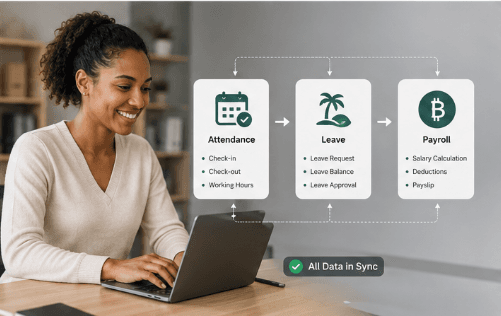
The three systems that must agree
- Attendance / time — who worked which hours or shifts
- Leave — approved absence that reduces expected work or accrues liability
- Payroll — gross, deductions, and net based on the period’s reality
They agree when they reference the same employee ID, the same period dates, and the same approval status. Spreadsheets break this by becoming three files with three owners. For broader context, see payroll accuracy starts with people data.
What good sync looks like
Leave reduces payable time automatically
When annual leave is approved, the day should:
- Appear on the team calendar
- Reduce attendance expectations (or mark as leave type)
- Feed unpaid/paid leave flags into payroll inputs
Managers should not re-enter the same day in three places.
Attendance corrections close before payroll lock
Corrections (missed punch, wrong shift) need a deadline. After lock, changes become next-cycle adjustments—not silent edits mid-run.
Mid-period events have explicit rules
Transfers, promotions, and terminations need effective dates that attendance and leave both respect. A leave balance should not accrue on a terminated record.
Design cutoffs that humans can follow
Publish a simple monthly calendar:
| Milestone | Owner | Example |
|---|---|---|
| Attendance correction deadline | Ops / managers | Day −3 before pay calc |
| Leave approval deadline for period | Managers / HR | Day −2 |
| Payroll input freeze | Finance / payroll | Day −1 |
| Payslip release | Payroll | Payday |
If leave can be approved after freeze, define whether it is unpaid advance, next-cycle deduction, or exception-only—and document it.
Common failure modes
WhatsApp approvals
Verbal or chat approvals create shadow leave. Require system approval for anything that affects pay or balances—see leave balances.
Duplicate employee records
One person in attendance under a nickname and in payroll under a legal name guarantees mismatches. Directory must be the source of identity.
Public holidays treated inconsistently
Some sites work, some do not. Holiday calendars must be site-aware or payroll will over/underpay. See public holiday calendars and leave planning.
Overtime policy not encoded
If overtime rules live only in a manager’s head, attendance exports will never match pay. Encode rules or accept permanent exceptions.
Practical sync checklist
- One employee ID across attendance, leave, payroll
- Leave types mapped to paid / unpaid / half-day behaviors
- Attendance export or live feed used by payroll (no retyping)
- Correction window published to managers
- Exception log for items that miss cutoff
- Reconciliation report: hours + leave days vs pay elements
For factories and multi-site teams
Shift patterns, biometric devices, and branch calendars raise the stakes. Prioritize tools that support multi-site attendance and clear leave routing—see factory attendance tracking and attendance software for factories.
FAQ
Should leave and attendance be the same module?
Not necessarily—but they must share the employee calendar. Separate tools only work with reliable integration and identical period definitions.
What if we already closed payroll and find a leave error?
Treat it as a documented adjustment next cycle. Do not silently rewrite closed payslips without a correction policy.
Who owns the sync?
HR owns leave policy and balances; ops owns attendance capture; finance owns pay calculation. One person should own the cutoff calendar so accountability is clear.